DepLog In-Depth Review - Intelligent Dependency Monitoring and Risk Assessment
Let's take a close look at DepLog — a smart dependency monitoring platform that helps engineering teams stay ahead of risky updates.
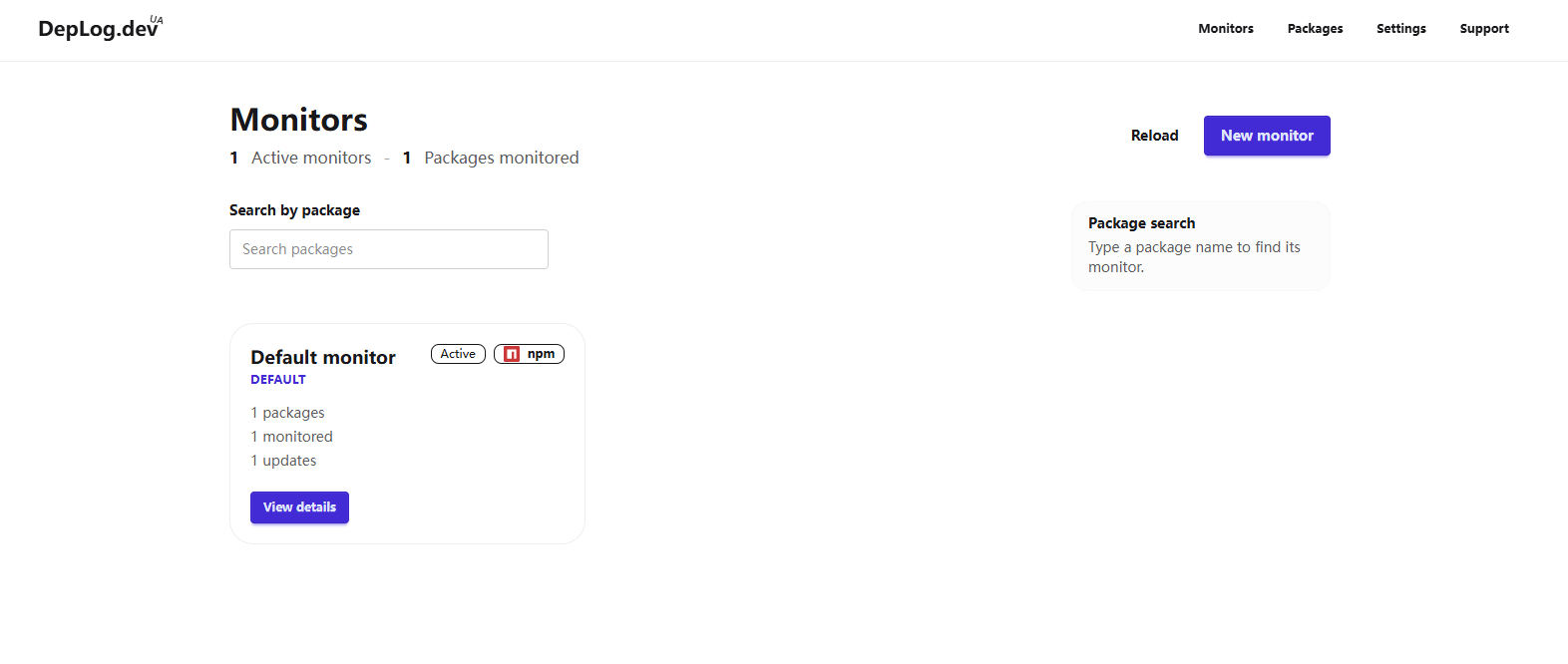
Any engineering team that's been burned by a dependency update knows the sinking feeling. The existing landscape of tools like Dependabot and Renovate is heavily skewed toward automation — they churn out pull requests for every new version — but they punt the hard question to you: should I actually merge this?
What's the actual risk level? Are there breaking changes lurking? Is this update worth your team's attention right now?
DepLog approaches the problem differently. Instead of flooding you with automated PRs, it monitors releases across package managers, flags updates that carry real risk, bundles changelog context alongside a risk score, and routes alerts to your team through email, Slack, Teams, and webhooks.
Net effect: Smarter decisions, fewer production surprises from dependency changes.
The core philosophy behind DepLog is dependency risk scoring paired with impact analysis — giving you enough context to make confident update decisions rather than drowning in automated pull requests. Where conventional dependency tools push updates at you, DepLog helps you spot breaking changes early and steer clear of dangerous updates before they ever touch production.
With a forever-free tier covering 5 packages and flexible pricing that grows with your needs, DepLog makes professional-grade dependency monitoring accessible to teams of every size. It's not another dependency updater — it's a smarter way to watch, evaluate, and manage the flow of dependency releases.
In this review, we'll unpack how DepLog enables engineering teams to maintain production stability while slashing the time spent reviewing dependency updates.
The Core Problem: Why Traditional Dependency Tools Fall Short
Standard dependency management approaches suffer from several critical weaknesses:
- Automation Without Insight: Most tools prioritize generating automated PRs but provide zero meaningful context about the actual risk or potential impact of the update
- Belated Breaking Change Discovery: Breaking changes tend to surface late — during code review, or worse, after deployment — when they should have been caught much earlier
- Manual Changelog Drudgery: Teams burn hours manually combing through changelogs to understand what shifted and gauge whether an update is safe
- Duplicate Package Clutter: The same package appearing in multiple versions across projects creates alert noise and makes organization painful
- Pre-Release Noise: Alpha, beta, and RC releases flood notification channels even when you're not ready to evaluate them
- Production Stability at Risk: Without structured risk assessment, dependency updates introduce unexpected regressions and breaking changes that directly impact end users
DepLog tackles these pain points through intelligent monitoring — equipping teams to make informed calls about when and what to update.
What Makes DepLog Worth Choosing?
- 🚀 0-100 Risk Scores: Each release gets scored from 0 to 100, letting you spot dangerous updates at a glance
- 📊 Changelog Context: Receive key deltas and highlighted risks so you can decide faster
- 🎯 Breaking Change Detection: Early flags for risky updates mean you can plan remediation before code hits production
- ⚡ Multi-Channel Alerts: Email, Slack, Teams, and webhook notifications land where your team already works
- 📈 Multi-Manager Support: Track npm, Python, Go, and additional package managers from a unified dashboard
- 🆓 Free Forever Tier: Monitor up to 5 packages indefinitely — no credit card needed
- 🏢 Flexible Pricing: Package blocks with predictable costs that scale alongside your needs
- 🎨 Duplicate Detection: Identify duplicate packages spanning multiple projects to consolidate and cut noise
- 🔇 Pre-Release Control: Alpha, beta, and RC tags stay silent unless you explicitly opt in
- 💡 Impact Analysis: Grasp the potential blast radius of a dependency update before merging
Core Features in Depth
Risk Scoring Engine
DepLog's risk scoring system forms the backbone of its intelligent monitoring approach.
How Scoring Works
Each release is assigned a score between 0 and 100:
- Score of 0: No risk keywords detected in the latest changelog — this update looks clean
- Score of 100: Strong signals of security vulnerabilities or breaking changes — warrants careful review before updating
- Mid-Range Scores: Graduated risk levels that help you triage which updates need immediate attention versus those that can wait
The risk score is embedded directly within the changelog context, giving you quantitative assessment side-by-side with the qualitative details necessary for sound decision-making.
The Value of Risk Scoring
Traditional dependency tools apply a flat treatment to every update, forcing your team to manually evaluate each changelog. DepLog's risk scoring:
- Focuses Your Attention: Tackle high-risk updates first; low-risk ones can sit in the queue
- Cuts Review Overhead: Bypass safe updates and invest time where it genuinely matters
- Prevents Breaking Changes: Intercept dangerous updates before they cause production incidents
- Standardizes Judgment: The entire team sees uniform risk indicators, eliminating inconsistent decisions
Best for: Engineering managers, tech leads, and senior developers who need to make informed dependency decisions without spending hours poring over every changelog.
Changelog Context and Impact Analysis
DepLog extracts the key deltas from release changelogs and surfaces the risk, so you understand what changed and why it's significant.
What Arrives in Each Alert
Every notification bundles:
- Change Summary: The critical deltas pulled from the latest release notes
- Risk Markers: Highlighted keywords and phrases that signal potential trouble
- Breaking Change Flags: Clear indicators when breaking changes are present
- Security Notices: Alerts when security vulnerabilities are disclosed
This dependency update impact analysis spares you from clicking out to GitHub or npm to hunt down changelogs — DepLog brings the essential context straight into your alerts.
Time Savings Breakdown
Without DepLog, the typical team workflow goes like this:
- Get notified of a new package version
- Navigate to the package registry or GitHub
- Scroll through the full changelog hunting for relevant changes
- Attempt to determine whether breaking changes exist
- Decide to update, postpone, or skip
With DepLog, the workflow collapses to:
- Receive alert with changelog summary and risk score
- Review the key deltas and highlighted risks
- Make an informed call immediately
This approach to dependency monitoring carves hours out of your team's weekly dependency review cycle.
Alert Delivery Architecture
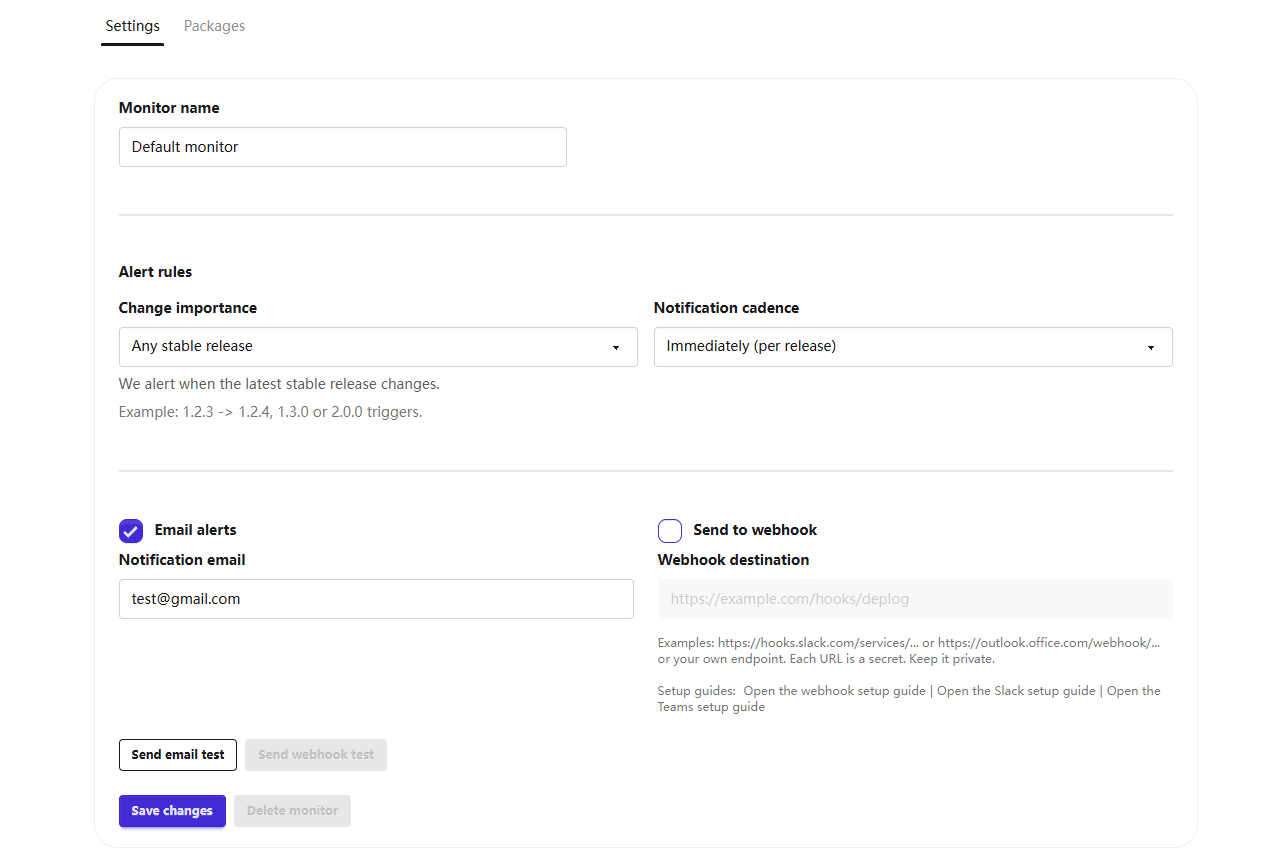
DepLog routes dependency alerts across multiple channels to align with how your team actually operates.
Alert Channel Options
- Email: Default notifications sent to the account owner, with per-monitor override capabilities
- Slack: Real-time alerts delivered directly into the channels where your team collaborates
- Microsoft Teams: Enterprise-grade alert connectivity
- Custom Webhooks: Plug into any webhook-compatible system for maximum integration flexibility
Configuring What Triggers Alerts
DepLog gives you granular control over alert triggers:
- Major Versions Only: Receive notifications exclusively when major version bumps occur
- All Stable Releases: Get alerted for every stable update
- Full Stream: Monitor every release for complete visibility
Pre-release tags (alpha, beta, RC) remain silent until you explicitly opt in — eliminating the pre-release noise that clogs notification channels.
Per-Monitor Customization
Different projects carry different requirements. DepLog enables you to:
- Override Alert Channels: Route Slack alerts for some projects, email for others
- Set Notification Cadence: Control how often you receive alerts
- Tune Thresholds: Adjust which releases trigger notifications based on your team's preferences
This level of flexibility means dependency alerts conform to your actual workflow rather than forcing a rigid, one-size-fits-all scheme.
Multi-Package Manager Support
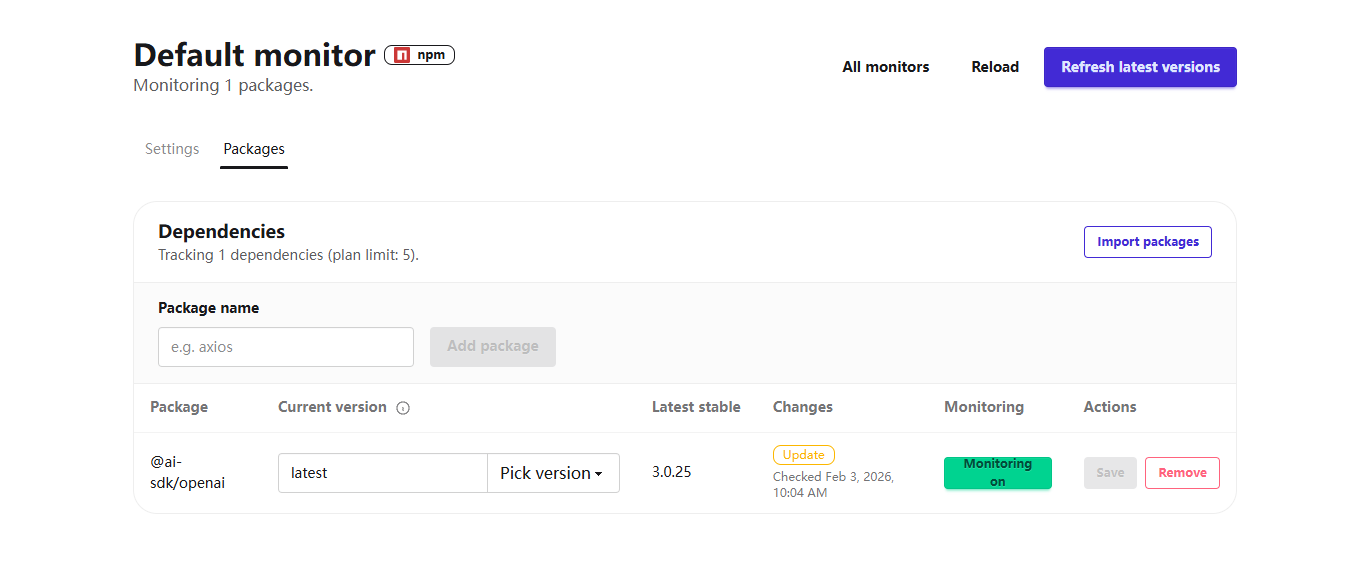
DepLog covers public package managers spanning web, backend, mobile, and tooling ecosystems.
Supported Ecosystems
Monitor updates across the ecosystems you ship on:
- JavaScript/npm: The largest package registry in the world
- Python/PyPI: Essential for backend services and data science projects
- Go Modules: Track Go package updates
- And More: Check DepLog.dev for the complete list of supported package managers
Unified Cross-Ecosystem Visibility
For teams working across multiple languages and package managers, DepLog delivers:
- Unified Dashboard: Watch all your dependencies from a single pane of glass
- Consistent Risk Scoring: Risk assessment operates identically across every package manager
- Consolidated Alerts: Receive notifications for updates spanning all your ecosystems
This comprehensive dependency monitoring eliminates the need for separate tools per language or framework.
Duplicate Package Detection
The same package appearing in different versions across projects generates noise and complicates dependency management. DepLog identifies duplicates so you can consolidate.
Why Duplicates Hurt
Without visibility into duplicates, teams wrestle with:
- Alert Fatigue: One package, multiple versions trigger redundant alerts
- Version Inconsistency: Different projects running divergent versions of the same dependency
- Maintenance Overhead: Manually tracking and updating disparate versions
DepLog's Approach
DepLog surfaces duplicates across your monitors, helping you:
- Unify Versions: Standardize on consistent versions across projects
- Cut Alert Noise: Eliminate redundant notifications from duplicate packages
- Simplify Maintenance: Track dependencies with greater efficiency
This feature delivers outsized value for organizations managing multiple services or monorepos that share dependencies.
Pricing: Flexible Plans for Teams of Every Size
DepLog's pricing model is built to scale with your requirements while keeping costs predictable.
Free Tier: 5 Packages, Forever
Designed for small projects and teams evaluating the service:
- Cost: Completely free, permanently
- Credit Card: Not required
- Included Features:
- Monitor up to 5 packages indefinitely
- Changelog parsing on every monitor
- Email, Slack, Teams, and webhook alerts
- Risk scoring for all releases
- Duplicate package detection
- Pre-release filtering
Verdict: An outstanding entry point for small teams and side projects. The forever-free tier grants full access to core features with zero financial commitment, making it trivial to try DepLog risk-free.
Paid Tier: Package Blocks That Flex
For teams monitoring beyond 5 packages:
- Cost: Blocks of packages with predictable, usage-based pricing
- Billing: First invoice arrives 30 days after upgrading
- Included: Everything in Free Tier, plus:
- Scale up to monitor hundreds of packages
- Blocks auto-adjust as your monitor list changes
- Predictable pricing that grows linearly with your needs
- All alert channels included
Usage Calculation: Every package entry across your monitors counts toward the block limit, duplicates included. Removing monitors automatically credits the difference.
Verdict: Highly competitive pricing for teams. The block-based model yields predictable costs that scale linearly, and the 30-day grace period before the first invoice gives you ample time to evaluate. Visit DepLog.dev for current rates and detailed pricing.
Free Dependency Validation
Before committing to full monitoring, DepLog offers no-cost dependency file analysis:
- Free Validation: Drop a dependency file for your package manager or paste a list — once per minute
- Instant Results: Findings are emailed to you without any onboarding
- Zero Commitment: See what DepLog can detect before creating an account
This feature lets you map your dependency landscape before diving into monitoring.
System Requirements
DepLog is a cloud-based service with minimal prerequisites:
- Account: Sign up at DepLog.dev to begin monitoring
- Internet: Required for monitoring and alert delivery
- Supported Package Managers: Public registries including npm, Python, Go, and others
- Alert Channels: Email (default), with optional Slack, Teams, and webhook integrations
- Browser: Any modern browser for dashboard access
As a SaaS platform, there's nothing to install or maintain — sign up and start monitoring.
Setup and Onboarding
Getting DepLog up and running is straightforward:
- Sign Up: Create your free account at DepLog.dev
- Add Packages: Paste a dependency manifest or type package names manually
- Configure Alerts: Set your preferred alert channels and frequency
- Start Monitoring: Begin receiving alerts with changelog context and risk scores
Import Methods
DepLog supports several onboarding paths:
- Paste Dependency File: Drop your package.json, requirements.txt, go.mod, or other manifest files
- Manual Entry: Type package names and let DepLog resolve versions from the registry
- Free Validation: Test dependency file validation once per minute before committing
The entire setup flow takes minutes, and your first 5 packages are monitored forever at no cost.
Competitive Positioning: How DepLog Stands Apart
DepLog carves out its space through a focused emphasis on risk assessment and intelligent monitoring rather than update automation.
Key Differentiators
- Dependency Risk Scoring: Unlike tools that treat every update identically, DepLog assigns 0-100 risk scores that help you prioritize high-risk updates
- Changelog Context in Alerts: Key deltas and risk highlights land directly in notifications — no need to click out to external sources
- Breaking Change Detection: Early identification of breaking changes so you can plan remediation before production impact
- Decision Support Focus: DepLog helps you make smart update choices rather than burying you under automated PRs
- Multi-Channel Alerts: Email, Slack, Teams, and webhooks ensure alerts reach your team where they work
- Pre-Release Control: Alpha, beta, and RC versions remain silent until you opt in
- Duplicate Detection: Spot duplicate packages across projects to consolidate and reduce noise
- Free Forever Tier: Monitor 5 packages indefinitely with no credit card required
Side-by-Side Comparison
Traditional dependency management tools take fundamentally different approaches to keeping dependencies current.
| Feature | DepLog | Dependabot | Renovate |
|---|---|---|---|
| Risk Scoring | ✅ Yes | ❌ None | ❌ None |
| Changelog Context | ✅ In Alerts | ⚠️ PR Body Only | ⚠️ PR Body Only |
| Breaking Change Detection | ✅ Early Flags | ⚠️ Manual Review | ⚠️ Manual Review |
| Alert Channels | ✅ Multi-Channel | ⚠️ PR Only | ⚠️ PR Only |
| Automated PRs | ❌ Focus on Alerts | ✅ Yes | ✅ Yes |
| Pre-Release Filtering | ✅ Yes | ⚠️ Configurable | ⚠️ Configurable |
| Duplicate Detection | ✅ Yes | ❌ None | ❌ None |
| Impact Analysis | ✅ Yes | ❌ None | ❌ None |
| Free Tier | ✅ 5 Packages Forever | ✅ Unlimited PRs | ✅ Self-Hosted |
The DepLog Difference
Risk-Based Prioritization: Rather than applying uniform treatment to every update, DepLog's risk scoring directs your focus to updates that genuinely matter. Low-risk updates can be deferred; high-risk ones demand immediate attention.
In-Alert Changelog Delivery: Dependabot and Renovate embed changelog information in PR bodies, but you still need to click through to GitHub. DepLog delivers summaries and highlights straight into alerts — meeting your team in the tools they already inhabit.
Breaking Change Prevention: Traditional tools generate PRs and leave breaking change discovery to your code review process. DepLog flags breaking changes upfront with clear risk indicators, helping you plan mitigations before updates even land in your codebase.
Decision Support Over Automation: Dependabot and Renovate optimize for automating the update pipeline. DepLog optimizes for helping you make intelligent decisions about which updates to merge, which to defer, and which to skip entirely.
Who Gets the Most Value from DepLog?
👔 Engineering Managers: Accountable for production stability and team throughput. DepLog gives you an at-a-glance understanding of dependency risk so you can make informed calls without manually reviewing every update.
🔧 Tech Leads: Driving technical direction for your team. Use risk scoring to prioritize which updates warrant immediate attention and which can safely wait for slower cycles.
💻 Senior Developers: Responsible for reviewing and merging dependency updates. Changelog context and risk indicators accelerate reviews and make them more consistent.
🚀 DevOps Engineers: Managing deployment pipelines and production reliability. Breaking change alerts help you schedule deployments around risky updates and avert production incidents.
🏢 SaaS Companies: Teams shipping continuously who need to keep production stable. DepLog helps you intercept risky updates before they affect your customers.
💰 Fintech Teams: Operating in environments where reliability and security are paramount. Risk scoring and breaking change alerts support vulnerability assessment and compliance requirements.
🛒 E-Commerce Teams: Where downtime translates directly to revenue loss. Early breaking change detection enables scheduling updates during maintenance windows and avoiding peak-time disruptions.
🛠️ Developer Tools Companies: Teams building products for other developers. DepLog helps you maintain your own dependencies while you stay focused on building your product.
Roadmap: What's Coming to DepLog
DepLog's roadmap outlines several exciting enhancements to deepen its dependency monitoring capabilities:
Expanded Package Limits
Raise per-monitor and account-level caps while preserving fast scan performance. This will empower larger teams and organizations to track more packages without compromising speed.
AI-Powered Release Analysis
Planned AI-driven features include:
- Release Summaries: Automated distillation of changelog content
- Risk Signals: Enhanced risk detection powered by AI analysis
- Custom Rules: Tailor risk assessment to match your team's specific shipping practices
These AI analysis capabilities are currently slated for future releases, enabling teams to customize risk scoring around their unique workflows and standards.
Private Packages and Repositories
Token-based access for:
- Private Registries: Monitor dependencies hosted in private package registries
- Private Changelogs: Access release notes from private repositories
- Enterprise Integrations: Connect to internal package management infrastructure
These additions will extend DepLog's reach to teams operating with private dependencies and within enterprise environments.
Final Verdict: Should Your Team Use DepLog?
After thoroughly examining DepLog's feature set, I'm confident this tool fills a genuine gap in the modern development toolchain. While Dependabot and Renovate shine at automating updates, they leave teams swimming in PRs without delivering meaningful risk or impact context. DepLog steps into that gap with intelligent risk scoring and contextual alerts that empower informed decision-making.
What resonated most was the pragmatic, problem-solving orientation. The 0-100 risk scoring system gives teams an immediate read on which updates demand attention, while changelog summaries and risk highlights eliminate hours of manual investigation. Multi-channel alert delivery ensures updates land where teams already work — rather than introducing yet another tool to check.
The forever-free tier for 5 packages removes any barrier to trying DepLog, letting teams evaluate its value without commitment. The flexible block-based pricing offers predictable costs that scale linearly with usage — a solid fit for teams expanding their dependency monitoring over time. Check DepLog.dev for current pricing details.
DepLog is particularly valuable for engineering managers, tech leads, and senior developers who must balance production stability against the benefits of staying current on dependencies. By catching breaking changes early and providing impact analysis before updates reach your codebase, DepLog helps prevent production incidents and meaningfully reduces the time spent reviewing dependency updates.
Review Summary
- Ease of Implementation: ⭐⭐⭐⭐⭐ (5/5)
- Risk Assessment Quality: ⭐⭐⭐⭐⭐ (5/5)
- Alert System: ⭐⭐⭐⭐⭐ (5/5)
- Value for Money: ⭐⭐⭐⭐⭐ (5/5)
- Package Manager Support: ⭐⭐⭐⭐⭐ (5/5)
- User Experience: ⭐⭐⭐⭐⭐ (5/5)
- Overall Review Score: ⭐⭐⭐⭐⭐ (5/5)
Ready to monitor dependencies smarter? 👉 Start monitoring dependencies at DepLog.dev today. Keep your production stable and reduce time spent reviewing updates with intelligent monitoring that helps you prevent breaking changes.
Tags
# Review# DepLog# dependency alerts# dependency monitoring# dependency risk scoring# breaking change alerts# dependency update impact analysis# alerts for risky dependency updates# prevent breaking changes# changelog monitoring# package manager alerts# npm monitoring# Python dependencies# Go dependencies# DevOps tools# engineering tools# software dependencies# dependency management# release monitoring# risk assessment# developer productivity# production stability# tech tools# SaaS toolsGreetings Island AI Invitation Maker Review - Beautiful Event Invites Made Instantly with AI
About Us
Follow for new blogs
Subscribe to our blog
Subscribe to Newsletter
Subscribe to our newsletter to get the best products weekly.